Sandstone cleaning and sealing in Clareville
Clareville sandstone sits close to the water and under a lot of afternoon sun. We clean it with low pressure and the right chemistry, and seal it only where it can still breathe.
- Clareville 2107
- $20 million public liability
- Price on request
Most Clareville waterfront properties step down from the street to Pittwater in a series of sandstone terraces, walls and stairs, often ending at a sea wall, a small beach or a boatshed. Higher up, the stone tends to be in shade from garden trees, with black mould, lichen and tannin stains. Closer to the water it carries a tide line of weed and salt, and terraces facing west bake in the afternoon sun, which dries salt into the surface. Some homes also have stone paths and walls along the street frontage that collect grime from passing cars. Our technicians record each zone and trial cleaners before setting out a scope for the job.
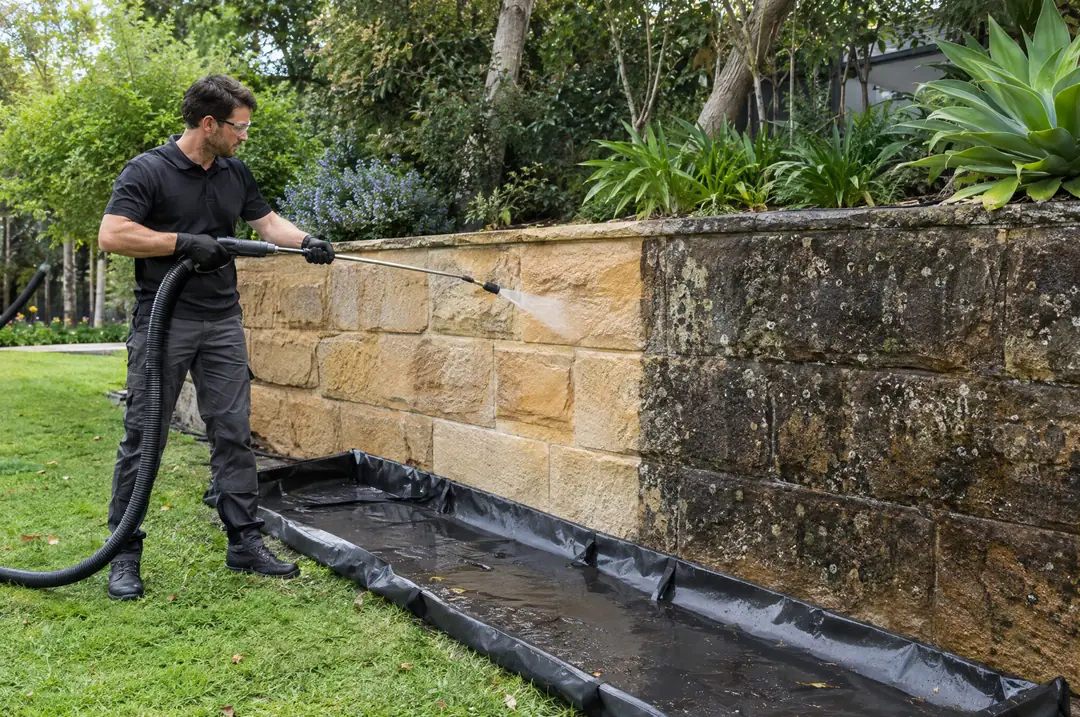
Growth on shaded stone is treated with a biocide given time to work, then gently brushed and rinsed at low pressure. Salt on terraces is brushed off dry, then dissolved and rinsed with fresh water. On sea walls and steps near the tide, we rely mostly on brushing and fresh water, and products are kept off surfaces below high water. Oil and fuel marks on boatshed floors are degreased and, if needed, poulticed. Bunding sits at each level, and the water collected behind it is vacuumed and taken away. If we find loose blocks or cracks in a wall, we stop and recommend the right specialist.
For Clareville sandstone, sealing is mainly worthwhile on terraces, paths and stairs near the house, where a breathable penetrating sealer reduces how much salt and tannin gets in and makes upkeep simpler. The sea wall itself, along with anything the tide splashes, is not usually sealed, because they are wetted from behind and below. Retaining walls are also left unsealed. On west-facing terraces we seal when the stone is dry but not hot, to avoid uneven results. We trial natural and enhancing finishes, record what was applied, and suggest that once a year you drip a little water on the most exposed paving: if it beads, the sealer is still doing its job.
Frequently asked questions
Sandstone questions we hear in Clareville.
Why does our terrace look white after it dries?
That is likely salt left behind as water evaporates. Brushing it off dry and rinsing with fresh water removes it; sealing helps prevent it soaking in.
Can you clean the stone on our sea wall?
From the land side at low tide, mostly with brushing and fresh water. Structural repairs to sea walls need a marine contractor.
Should we seal the stone near the water?
Usually not stone in the splash zone. We focus sealing on terraces, paths and stairs higher up.
Do you clean street-front walls as well?
Yes. Traffic grime and growth on front walls clean up well with a gentle method, and we keep the footpath safe while we work.