Sandstone cleaning and sealing in Darling Point
A lot of Darling Point sandstone is old, and much of it is protected. We clean it the way conservators recommend and seal only what will benefit.
- Darling Point 2027
- $20 million public liability
- Price on request
Darling Point has sandstone from almost every era of Sydney building, from 1840s walls and gate piers to modern landscape stone laid in the last few years. The older material often carries a history of its own: hard cement repairs, layers of old paint or sealer, rust from iron fixings, and faces softened by previous high-pressure cleaning. Newer stone is more likely to show straightforward organic growth, leaf staining from the ridge-top gardens and salt from the harbour. We survey the stone before quoting and separate cleaning work from restoration work, so you can see what each part involves, what it costs and what result to expect from it.
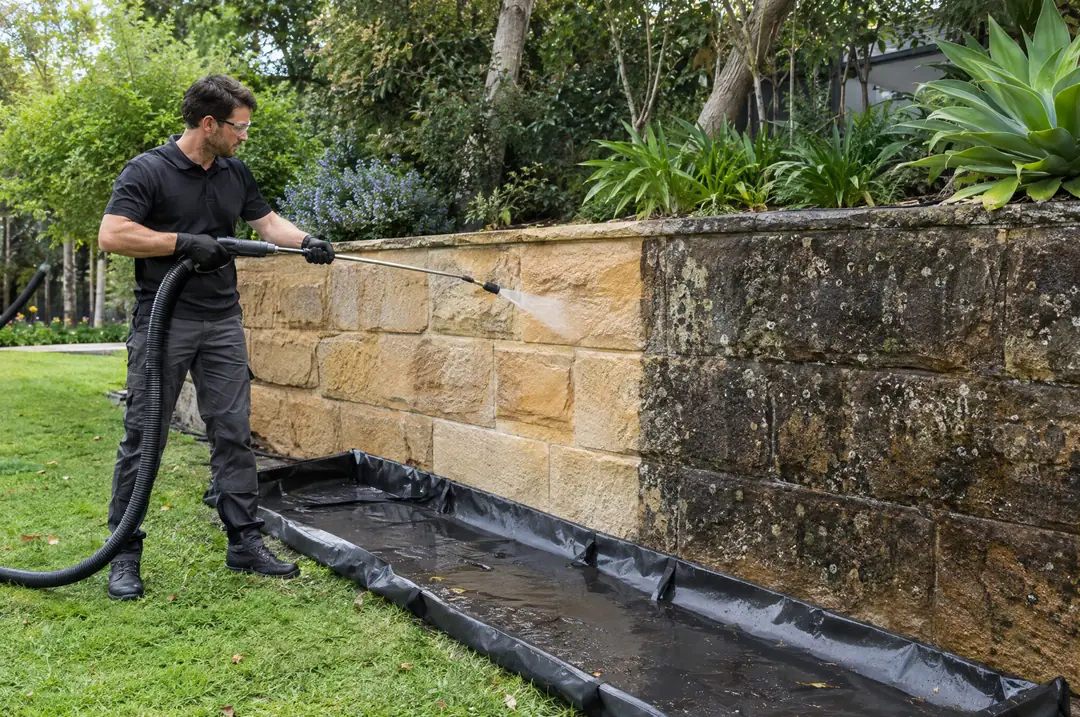
Cleaning follows a conservation sequence. Our technicians test a small area, treat organic growth with a biocide and leave it to dwell, then rinse with low-pressure or controlled hot water. Old coatings are tested for removal with the least aggressive stripper that works, and only then extended across the wall. Rust and deep staining are treated with poultices rather than acids, which on Hawkesbury sandstone tend to mobilise more iron and enlarge the stain. All wash water is captured, which matters on sites that fall straight to the harbour. Throughout, we photograph the stone, so there is a clear record of its condition before, during and after the work.
On historic walls, sealing is the exception rather than the rule. A wall that breathes freely and dries quickly after rain usually does better without it, and on a listed building there may be good reasons not to change how the stone behaves. Garden stairs, paving and terraces that take foot traffic and harbour salt are different; for those, a breathable impregnator keeps stains shallow and slows salt uptake. No glossy coatings are used anywhere. Where a property is heritage-listed, we discuss any sealing with you before it happens and record the product, area and date so the decision is documented for future owners and advisers.
Frequently asked questions
Sandstone questions we hear in Darling Point.
Can you remove old paint from a sandstone wall without damaging it?
Usually, using a paint stripper chosen after a test and a gentle rinse. Some paint has soaked deep into the pores and will lighten rather than disappear. On heritage items, check with the council before removal.
Should we seal our 19th-century sandstone wall?
Usually not. Historic walls generally need to breathe and dry freely. We focus sealing on paving, stairs and terraces that take traffic and salt.
Why don't you use acid to remove rust from sandstone?
Hawkesbury sandstone contains iron. Acid can release more of it and leave orange-brown blooms bigger than the original stain. Poultices draw the iron out instead.
Can you repoint the joints as well?
Yes. The new joints are lime-based and deliberately weaker than the stone, so they wear first. Structural repairs are referred to a stonemason or engineer.