Sandstone cleaning and sealing in Coogee
Coogee sandstone ranges from Inter-War apartment bases to cliff-edge garden walls. We treat salt, efflorescence and grime gently and seal where it helps.
- Coogee 2034
- $20 million public liability
- Price on request
In Coogee, sandstone appears most often on the street front: the low fences, piers and steps of apartment blocks, many of them from the 1930s, and the bases of the buildings behind them. Closer to the cliffs, houses add garden walls, terraces and stairs. Beachfront and cliff-edge stone carries a constant salt load, while the older apartment bases show efflorescence where moisture moves through them. Entries near the beach also collect sand, sunscreen and spilled drinks, especially through summer. Each of these has a different cause, and the first job is working out which is which, because a clean that suits one can do nothing for another.
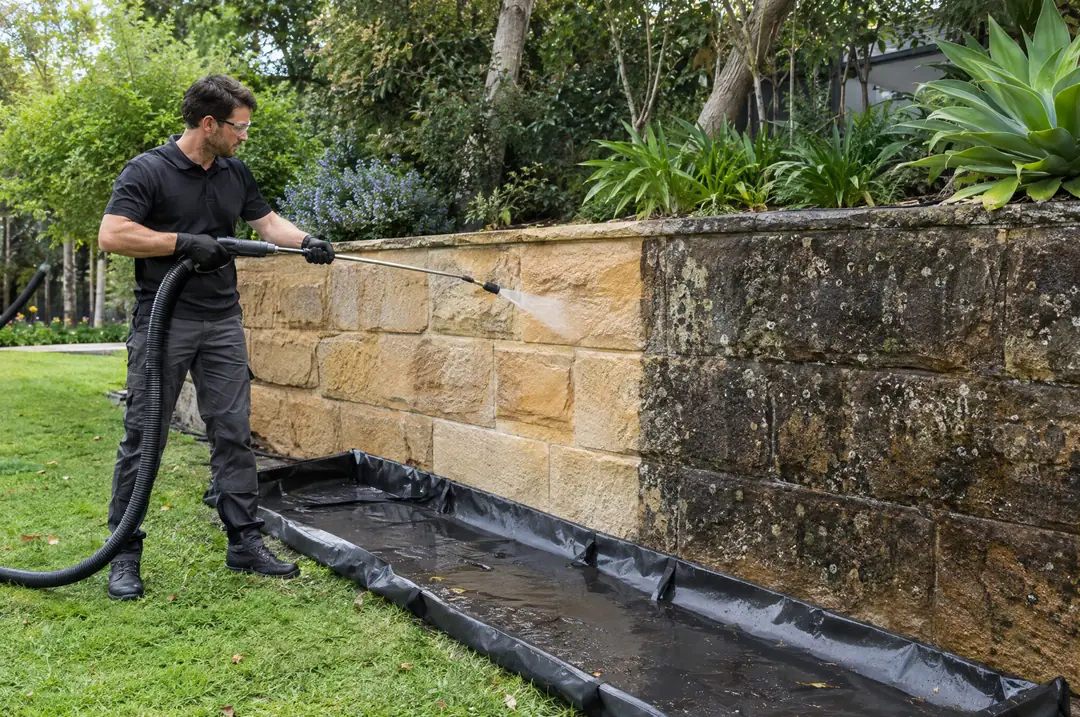
We match the clean to what is on the stone. Salt crust and efflorescence are brushed off dry, then treated and rinsed with fresh water. Grime and spills get a suitable detergent. Mould on shaded faces gets a biocide and time to work. Rinsing is low pressure or controlled hot water, because salt-weakened sandstone does not tolerate a high-pressure jet. Wash water is contained and recovered with a wet vacuum, keeping it off the footpath, out of the gutter and away from the cliff. On apartment buildings we work in sections and keep the entry usable. Where fence piers are crumbling at the base, we note whether repointing or a stonemason's repair is needed.
Steps, paths and fence caps generally earn their keep with a breathable impregnator, which slows salt and stain uptake and makes routine cleaning by building staff more effective. Building bases that draw moisture from the ground are usually left unsealed, with the moisture source addressed instead, because sealing them can trap salts and speed up the damage. You see sample patches first, and we document what went where, which helps strata managers plan ahead and explain the work to owners. Near the beach, drip a little water on the busiest steps once a year to see whether it still beads, and hose off salt crust whenever it starts to build up.
Frequently asked questions
Sandstone questions we hear in Coogee.
Can efflorescence on our building's sandstone base be stopped?
It can be reduced by treating the salts and dealing with the moisture source, such as drainage or garden beds against the wall. Sealing the base usually makes it worse.
Our front fence piers are crumbling at the bottom. Can you fix them?
We can clean, draw out salts and repoint with a soft lime mortar. Badly eroded stone needs a stonemason; we can work alongside one.
How often should sandstone near Coogee Beach be cleaned?
Many beachfront buildings benefit from a maintenance clean every one to two years, with fresh-water rinsing in between. Sealed stone stays cleaner for longer.
Do you work in the Dudley Street conservation area?
Yes, using conservation methods. Check with Randwick Council before restoration work that changes the stone's appearance.