Pool coping cleaning & sealing
Pool coping takes the hardest beating of any stone on the property: constant wetting, pool salt, chlorine, sunscreen, bare feet and full sun. It needs a cleaning and sealing plan built for exactly that.
- $20 million public liability
- Eastern Suburbs & Northern Beaches
- Price on request
Most coping failures we see start with salt. Salt-chlorinated pool water soaks into unsealed or under-sealed stone, and as it dries the salt crystallises in the pores. Cycle after cycle, the surface pits, spalls and turns sugary, starting at the waterline edge.
We clean coping with methods suited to the stone (acid-free for travertine and limestone, low-pressure for sandstone), refill open holes, and seal with a penetrating impregnator chosen for salt exposure. The surrounding paving gets the same treatment so the whole area weathers evenly.
We work so that nothing goes into your pool: covers and booms where needed, and run-off recovered. If your pool has been drained or is being renovated, it's the ideal time to protect new or existing coping.
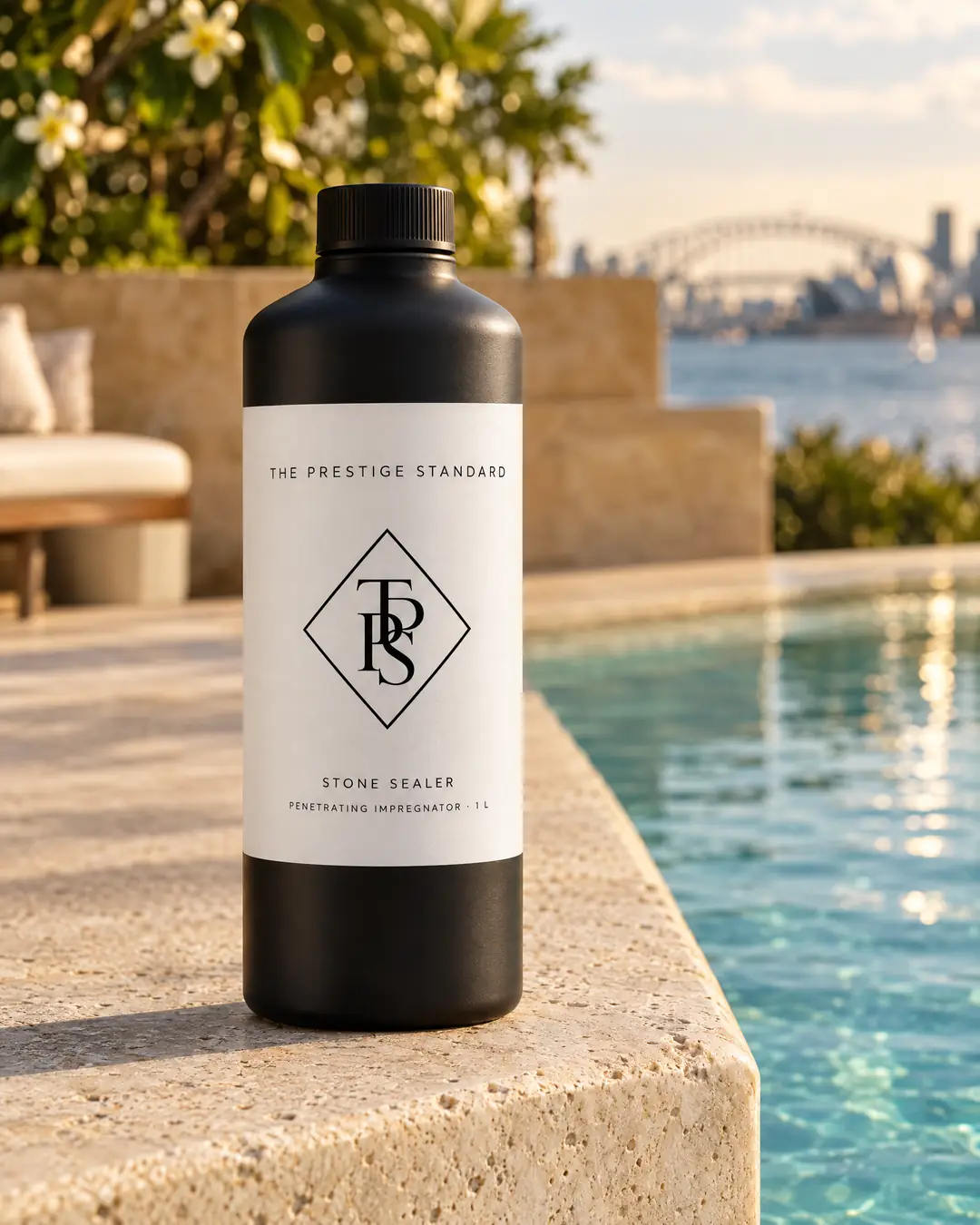
Signs you need pool coping cleaning & sealing
- Pitting, flaking or crumbling along the waterline edge
- White salt crust as coping dries
- Dark staining from leaves, sunscreen or oils
- Water soaks straight in instead of beading
- A slippery or peeling old coating
- New coping going in during a pool build or renovation
How we do it
- Inspect the coping and pool areaWe identify the stone, check for salt damage, loose or drummy pieces, and old coatings.
- Protect the poolWe place covers or containment so nothing enters the water.
- Clean and dryA stone-appropriate clean, then drying time. Coping holds water, so we don't rush this step.
- Fill and sealWe refill open holes and apply a salt-resistant penetrating sealer to the coping and surrounding paving.
- Hand overCure times before swimming, plus a simple maintenance routine.
Built for salt water
Not every stone sealer is designed for constant salt and chlorine exposure. We use impregnators formulated for pool environments and apply them to the faces that matter, including the edge and nose of bullnose coping, where salt attack starts.
Loose or drummy coping should be re-bedded by a tiler or pool builder before sealing. We'll flag any we find.
Aftercare
- Hose salt water off coping after heavy use.
- Keep pool chemistry balanced. Low-pH water can etch limestone and travertine.
- Water-drop test once a year, especially along the waterline edge.
Frequently asked questions
Straight answers from our stone-care technicians.
Why is my pool coping crumbling?
In salt pools, the usual cause is salt crystallisation inside the stone, called salt attack. Sealing slows it. Badly damaged pieces may need repair or replacement.
Can pool coping be sealed without draining the pool?
Yes. We protect the water and work from the deck side. A drained pool does make access to the inside face and the edge easier.
Will sealed coping be slippery for kids?
We use penetrating sealers that don't form a film, so the stone keeps its texture. Glossy coatings are the slippery ones, and we don't use them on coping.
Is sandstone or travertine better for pool coping?
Both work well when sealed and maintained. Travertine is denser but acid-sensitive. Sandstone is more porous and benefits greatly from sealing. We care for both.
How often should pool coping be sealed?
More often than other paving. Check it every year and re-seal when water stops beading. Exposure and pool type make a big difference.
Can you match replacement coping pieces?
We can work alongside your stonemason or pool builder. After cleaning and sealing, new and old pieces usually blend better than you expect.
Related services
- Travertine sealingAround a pool, unsealed travertine soaks up salt water like a sponge. As the water dries, salt…
- Sandstone sealingA good sandstone sealer is invisible. It sits inside the pores, not on top, so water beads off and…
- Travertine cleaningTravertine is calcium carbonate. Any acid, from a pool-shop 'tile cleaner' to a squeeze of lemon,…