Sandstone cleaning and sealing in Killarney Heights
Much of the sandstone in Killarney Heights dates from the 1960s homes built across the ridge. We clean it with patience, repair the effects of rough past cleaning where we can, and seal it sensibly.
- Killarney Heights 2087
- $20 million public liability
- Price on request
Many Killarney Heights homes have sandstone that has been in place for fifty years or more: front walls, terraced retaining walls, steps from the street and paved areas around the house. Over that time it has usually been cleaned several ways, some of them harsh, and patched with cement here and there. The result is often uneven: some areas sanded and pale, some black with mould, others brown with tannin from overhanging trees. Our technicians look at the whole picture, including what earlier treatments have done, and run small trials to see how the stone responds before suggesting what can realistically be achieved with cleaning and what may need restoration.
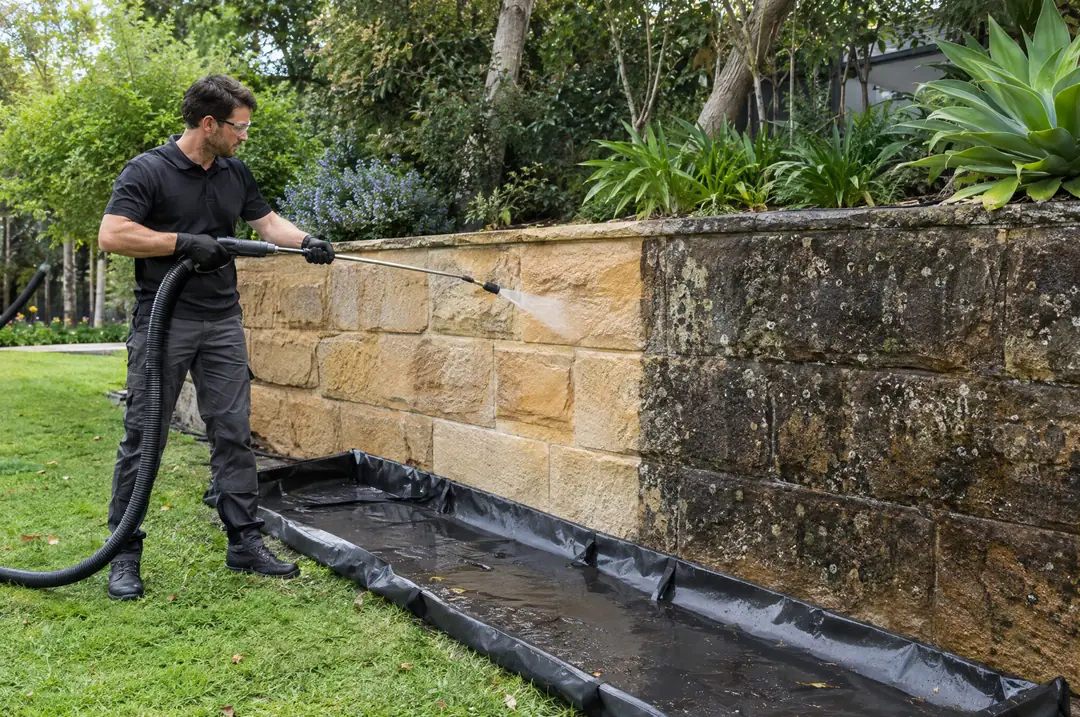
We start with the growth. A biocide suitable for sandstone is sprayed on and allowed time to penetrate and kill mould, algae and moss at the root. The dead growth is then lifted with soft brushes and rinsed off with low-pressure water, never a turbo tip, which would further erode stone that may already be soft. Tannin and older stains get spot treatments or a poultice. Cement smears and patches are recorded and discussed separately. Bunding along the low side of each area keeps rinse water from running into the gutters or the bush, and a wet vacuum collects it for disposal off site.
Sealing older sandstone needs care. Paths, steps and terraces in reasonable condition are generally worth treating with a breathable impregnating product, which helps them resist tannin and growth and makes routine sweeping more effective. Stone that has been badly eroded may need consolidation or repair before any sealing, and retaining walls are generally best left unsealed so moisture from the soil can escape through the face. Shaded terraces are given several dry days before sealing. We demonstrate natural and enhancing finishes on trial patches, note the products used, and recommend checking heavily shaded areas every year and sunnier ones every two to three years.
Frequently asked questions
Sandstone questions we hear in Killarney Heights.
Our sandstone has pale stripes from an old pressure clean. Can they be fixed?
Cleaning evens out the colour to a degree, but stripes cut into the surface are physical damage. Light honing or restoration may help; we assess it on site.
Can you remove old cement patches from our sandstone wall?
Sometimes, carefully, as a restoration task. It depends on how well the cement is bonded. We trial it first so the stone underneath is not damaged.
Is sealing worthwhile on 1960s sandstone?
On paths, steps and terraces in sound condition, usually yes. Very worn or damaged stone may need repair first.
How long does a clean take?
Most homes take one day to clean, with sealing on a later visit once the stone has dried through.